

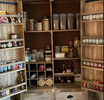
The larder that ate the kitchen
, by Sarah Frame, 1 min reading time
, by Sarah Frame, 1 min reading time
There’s a moment in every kitchen when you look around and think: how did it come to this?
The bread maker squatting on the worktop like a small grey building. The cookbooks wedged between the fridge and the wall because nobody ever got round to putting up a shelf. The supermarket wine you’d rather not explain. The printer cartridges that somehow migrated from the office and never went back.
None of it is ugly, exactly. It’s just… a lot. And it’s all on show.
This is where a larder unit earns its place. Not just as storage. As a confidential informant. A keeper of secrets.
A good larder is essentially an indoor shed. Tall enough to be serious. Deep enough to swallow things whole. And when you close the doors, the kitchen suddenly looks like the kitchen you always meant to have.
Inside, you can organise to your heart’s content, or not at all. That’s rather the point. The chaos doesn’t disappear. It just becomes private.
We’ve had customers tell us they’ve hidden everything from a fondue set to a foot spa behind larder doors. One keeps her embarrassing collection of novelty mugs in there. Another, a startling number of hot sauces she doesn’t want to justify to guests.
The bread maker is still there. Still looks like a brick. But now nobody knows.
A larder won’t change your life. It will just make your kitchen look like someone more organised lives in it.
Sometimes that’s enough.