

Swedish Death Cleaning. (Less morbid than it sounds.)
, by Sarah Frame, 5 min reading time
, by Sarah Frame, 5 min reading time
Swedish death cleaning isn't as grim as it sounds. Here's how to clear your home while you still can, and why it might be the kindest thing you do.
There is a Swedish concept called döstädning. It translates, with admirable directness, as death cleaning. Before you close this tab, hear it out.
The idea is simple. At some point in your life, preferably while you are still capable of making decisions, you go through your home and get rid of everything that does not need to be there. Not because life is short and stuff is meaningless. But because if you do not do it, someone else will have to. Probably your children. Probably on a weekend they had other plans for. Possibly while crying.
Margareta Magnusson, the Swedish author who brought the concept to an international audience, describes it as a gift. You are sparing the people you love from having to decide what to do with forty years of accumulated kitchen gadgets, three broken lamps you were definitely going to fix, and a drawer containing nothing but mystery keys.
It is, when you think about it, quite a kind thing to do.
The gap between the concept and the reality
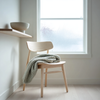
The Swedish version of this, as imagined in lifestyle magazines, takes place in a calm apartment with excellent light and very few objects. Everything has a place. Everything is considered. There is probably a single ceramic bowl on a wooden shelf, placed just so.
The British version takes place in a house where the under-stairs cupboard has not been opened since the previous owners. Where "having a sort out" means moving things from one room to another with renewed purpose. Where the loft contains items that have survived three house moves not because anyone wanted them, but because no one wanted to deal with them enough to do anything else.
This is not a criticism. This is most homes. Real ones, anyway.
How to actually do it
Magnusson's approach is methodical but not brutal. A few principles worth keeping.
Start with the easy wins. Books, clothes, kitchen things you have not touched in two years. These are low emotional stakes. Do not start with the loft. The loft will defeat you.
Ask one question per object. Will anyone I love want this when I am gone? If the honest answer is no, it can go. If it is yes, it deserves a proper place now - not a bin bag in the garage.
The sentimental stuff comes last. Photographs, letters, things with a story attached. These take time and that is fine. Set them aside and come back to them. Rushing sentimental objects is how you make decisions you regret.
Keep one private box. Magnusson's own advice: keep a small collection of things that matter to you but would mean nothing to anyone else. Things you want to have around without explaining why. When you are gone, this box goes with you. It is allowed.
It is not a one-afternoon job. It is not a weekend project either. It is an ongoing habit. A slower, quieter relationship with what you own.
The bit that gets missed
Most coverage of Swedish death cleaning focuses on the letting go. What gets less attention is what happens to the things you keep.
If you have done the work of deciding what actually matters, those things deserve better than a pile in the corner or a cardboard box in the spare room. They earn a place. A shelf, a cabinet, a drawer they can actually live in. Not because it looks nice, though it will. But because treating the things you have chosen to keep with some care is the whole point of the exercise.
You are not decluttering to own less. You are decluttering to own better.
A final thought
Döstädning sounds heavy. In practice, most people who try it describe the same thing: relief. The house feels lighter. So do they.
It turns out that a lot of what we hold onto is not stuff we love. It is stuff we never got around to deciding about. Making those decisions, while we still can, is not morbid. It is just honest.
And considerably kinder to your children than leaving them a loft full of mystery keys.